How Long Should a Magic Show Be for a Children's Party?
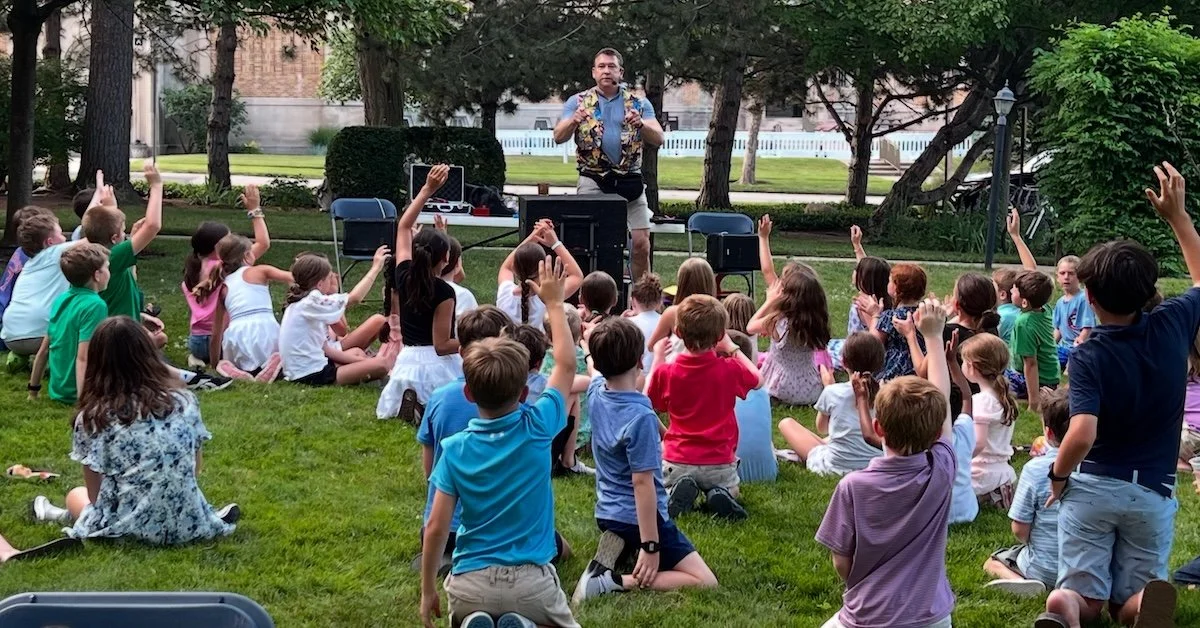
Parents planning a children's party often focus on the content of the entertainment: what kind of magic, whether there will be balloon animals, how many kids can participate. Show length is the detail that gets less attention but has more practical impact on the party's success than almost any other decision. A show that runs too long loses the room. A show that is too short leaves everyone wanting more in a way that can feel anticlimactic. Getting the length right is the difference between an entertainment slot that peaks and ends at exactly the right moment and one that the birthday child and their guests have to endure to the finish.
The complicating factor is that the right length is not the same for every party. The age of the children, the size of the group, how the show fits into the party's overall schedule, and the performer's specific show format all interact to determine what duration will actually work. A blanket answer of forty-five minutes satisfies the question without serving the specific situation.
Quick Answer: As a general guide, shows for children aged three to five should run 20 to 25 minutes. Ages five to eight can sustain 30 to 40 minutes comfortably. Ages eight to twelve can handle 40 to 50 minutes when the show is paced and engaging. Always err on the side of ending while children are still wanting more rather than pushing through a show that has already peaked. A skilled performer will read the room and adjust accordingly.
Why Age Determines Attention Span More Than Anything Else
Attention span in children is not a fixed quantity that can be extended through better entertainment. It is a developmental reality that changes with age and cannot be meaningfully overridden by even the most skilled performer. A three-year-old simply cannot sustain focused attention on a single activity for thirty minutes, regardless of how engaging the activity is. Attempting to run a full forty-five minute show for a group of three and four year olds is not ambitious; it is a setup for a difficult final fifteen minutes.
The relationship between age and optimal show length is approximately five minutes of show per year of age, with a practical ceiling for most children's party contexts. This gives a useful baseline that adjusts naturally as the audience's age changes:
● Ages 3 to 4: 15 to 20 minutes. Short, visually vivid, high energy throughout, participatory from the first moment.
● Age 5: 20 to 25 minutes. Beginning to sustain attention through a narrative arc, responsive to building effects.
● Ages 6 to 7: 30 to 35 minutes. Can follow a structured show with multiple acts and increasing complexity.
● Ages 8 to 10: 40 to 50 minutes. Ready for a full show with setup, development, and a satisfying finale.
● Ages 10 to 12: 45 to 55 minutes. Can appreciate more sophisticated material and a longer build if the content matches their developmental level.
The specific age of the birthday child and their friends is the starting point for any show length conversation. Best age for magic explores in more depth how different age groups respond to magic as entertainment and what style of show suits each developmental stage.
The Danger of Running Too Long
The most consistent mistake in children's party entertainment is overstaying the welcome. A show that ends while children are leaning forward and still engaged leaves a positive impression that the parents remember and the children talk about. A show that runs into the zone where children are getting restless, looking around, or beginning to talk to each other rather than watching creates a management problem for the performer and a diminishing experience for everyone.
The reason this matters more in children's entertainment than in adult entertainment is that children are not politely suppressing their disengagement. When they are done, they communicate it physically and vocally, and one child's restlessness is contagious. A room of twenty five-year-olds that was fully engaged twenty minutes ago can shift in a matter of minutes if the show does not end at the right moment.
This is why keeping children engaged requires a performer who is reading the energy of the room continuously and adjusting pace, participation levels, and intensity accordingly, rather than mechanically running through a fixed set regardless of how the group is responding.
Where the Show Sits in the Party Schedule Matters
Show length cannot be evaluated in isolation from where the show sits in the party's overall timeline. A magic show that runs immediately after cake, when children are full of sugar and already in a heightened state of excitement, may need to be shorter than one that runs before food when children are fresh and ready to focus. A show that runs at the very end of a party as children are being collected by parents is a different situation from one that is the centrepiece of a well-structured afternoon.
The most reliable placement for a children's magic show is early to mid-party, before food if possible, when attention is at its highest and the excitement of the occasion has not yet produced the fatigue that comes from two hours of birthday party stimulation. A thirty-minute show placed at the right moment in a two-hour party structure can elevate the entire event. The same show placed at the end of an already-long afternoon lands very differently.
Group Size and Its Effect on Duration
The number of children at the party also influences how long the show should run, particularly for participation-heavy shows. A show with regular audience participation involving different children each time can sustain a longer runtime with a larger group because the pool of willing volunteers keeps the participation fresh. A smaller group of eight children will exhaust the natural participation rotation more quickly, which affects the dynamic of shows designed around frequent audience involvement.
Very large groups of thirty or more children also change the energy dynamics in ways that affect pacing. A skilled performer can work a large group effectively, but the management of a large audience of children requires more active energy from the performer and can be more demanding to sustain over the same duration that a smaller group would comfortably hold.
Mixed Age Groups: Finding the Common Duration
Many children's parties include siblings and cousins who span several age ranges. A party where guests range from four to ten years old presents a genuine challenge for show length: what holds the younger children's attention is shorter than what the older children would ideally want.
The practical approach is to aim for the lower end of the range appropriate for the youngest attendees while building in enough material complexity to keep the older children genuinely engaged. A 30 to 35 minute show with strong visual effects for the younger children and more sophisticated participation and humour for the older ones typically serves the middle range better than either extreme. A good children's performer handles this layering naturally.
Understanding what parents should expect from a professional children's magician includes realistic expectations about show length: a performer who promises a sixty-minute show for a group of five-year-olds should prompt questions rather than confidence.
A Note on Ending Strong
The length of a show matters less than where it ends in terms of energy. A show that ends at its peak, with the room at maximum excitement following the finale, leaves a lasting positive impression. A show that runs past its natural peak and then tries to end on a recovery note is remembered for how it felt at the end, not at its best moment.
The best children's entertainment professionals know exactly when they have reached the peak of the show's energy arc and structure their finale to land at that moment rather than extending beyond it. The children who are cheering and clapping as the show ends will talk about it at school on Monday. The ones who were visibly restless for the last ten minutes will remember a different experience.
Magic by Randy's children's magic shows are structured for specific age groups and group sizes, with show lengths calibrated to the audience rather than a fixed format that ignores these variables.
Frequently Asked Questions
Can I request a shorter or longer show than the standard option?
Yes, and a good children's entertainer will advise on whether your requested duration suits the age and size of the group. If a parent wants a 45-minute show for four-year-olds, an experienced performer will gently explain the likely outcome and suggest a better alternative. A performer who simply agrees to any requested length without discussion is not giving you the benefit of their experience.
Should the magic show happen before or after cake?
Before cake is almost always better. Children are more alert before food and sugar, attention is at its highest earlier in the party, and placing the show before cake gives the entertainer the room at its most responsive. After cake is workable for older children but can be very challenging for under-sixes who are in a post-sugar state.
What happens if children start losing interest before the show is finished?
A skilled professional reads this in the room and adjusts: increasing participation, shortening a section, or moving directly to the finale if the energy has peaked early. This is exactly the skill difference between an experienced children's entertainer and someone without that specific background. The ability to adapt to the live room is more valuable than adherence to a fixed script.
How long should there be between the show and other party activities?
A five to ten minute buffer before and after the show allows for the natural settling of children into the performance space and for the organic energy release that follows. Immediately stacking another structured activity after the magic show does not give children the transition time they need to process and share their reactions, which is part of how the show's impact is consolidated.
Is forty-five minutes a reasonable show length for a mixed eight to ten year old group?
Yes, this is a solid duration for this age group if the show is well-paced and the performer has material that holds attention through the full arc. The key is a strong finale that lands before the room peaks rather than after, so the show ends at its best moment rather than declining into its final section.
The Bottom Line
The right magic show length for a children's party is the one that matches the age of the audience, ends while children still want more, and fits the party's overall structure so it lands at the right moment in the afternoon's energy arc. The general guide of five minutes per year of age gives a useful baseline, always with the ceiling that leaving them wanting more is always better than staying past the peak.
Magic by Randy performs children's birthday magic shows across Chicago and the North Shore with show lengths and formats designed specifically for the age and group size at each party. If you are planning a birthday party and want to discuss the right format, reach out for a conversation about what would work best for your child's guests.